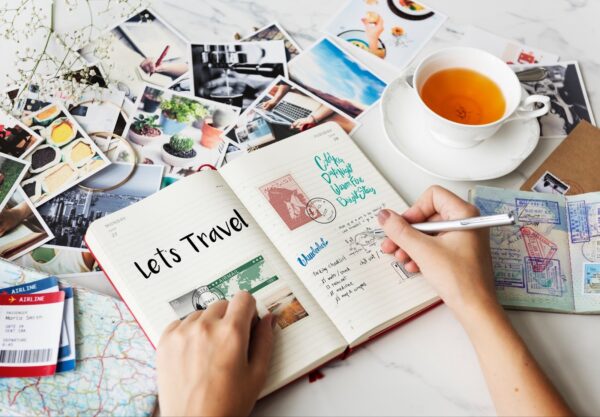
The magic of slow travel that arises when you miss your train, and it is not the kind of experience where you anxiously search for the right train, while hurriedly moving through train stations loaded with bags and other belongings. I mean the more intentional or deliberate kind of missing when you glance at the departure board, recognize your connection, and then simply decide to take that train, or the next train instead.
In the midst of all the tightly packed itineraries of visiting a dozen cities in fourteen days, we simply forgot that travel was not supposed to be just another long list of things we set out to optimize and conquer. Slow travel is less about a movement and more of an act of rebellion against our modern day obsession with consuming places as ticking them off a list.
It is the exact opposite of the modern day “if it’s Tuesday, This must be Belgium” traveling mindset that has taken over the tourism conversation for the last 50 years. Instead of focusing on how many stamps you are collecting in your passport, slow travel asks one and only one question. What does it feel like to live somewhere even for a small amount of time?
Here are four reasons why the art of slow travel matters:
The Philosophy of Staying Put
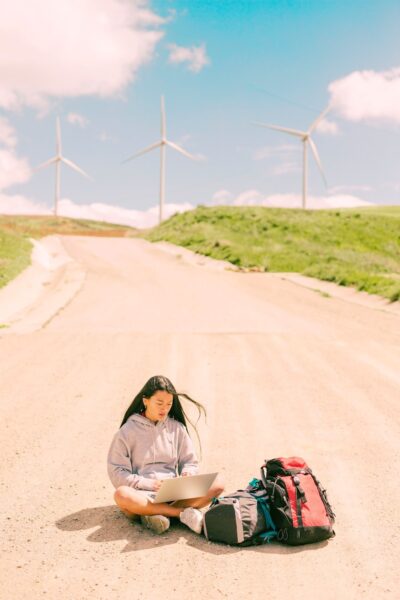
Essentially, slow travel means spending more time in fewer destinations. Instead of spending three days in Paris, and three days in Rome and three days in Barcelona, you may spend three weeks in an Italian village that’s name you won’t learn how to pronounce properly until the second week. This isn’t a sign of you being sluggish or a lack of travel aspirations. It’s a resolution to trade breadth of experiences, for depth. It’s about choosing to understand, rather than consume.
When you stay put for an extended time, something curious happens. Those first three days, you are still in a tourist mode, camera at the ready, taking in everything. But a week into it and you start to carve out your routines. You visit the bakery that the owner greets you by name. You know which street to take, to not become entrenched with tourists. You have found that little park where all the locals walk their dogs at sunset. You are no longer trying to “see” You are “being”.
The real change happens when you transition from observer to participant. You start to perceive the cadence of a place: how the streets sound different on Sunday mornings; how the light subtly shifts during the course of a day; the way people acknowledge and greet one another at the market. Those are not the types of facts you would learn from a guidebook, but rather things to be soaked in.
The Economics of Slowing Down
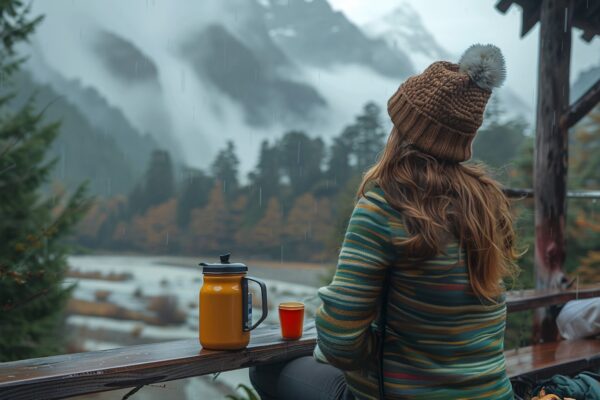
One thing that surprises people about slow travel is the cost is often lower than conventional tourism. If you’re not always booking new place series, hopping on flights or paying the costs of hurried transit from one place to another, your day-to-day expenses can be significantly less. Monthly leases on apartments are multiples lower than nightly hotel costs, and it is easy and appropriate to shop at local markets instead of dining out for each meal.
It is not like there is a tax on being a traveler, the trade-off is simpler because you are in the local economic zone. However, the only currency in slow travel is time. It requires you be privileged enough to take a long stretch of time off work, or either have the luxury of remote work, or take that brief period in life when you are somewhat able to disengage from your obligations and not have everything fall apart for months. Not everyone has this luxury, which makes it all the more valuable when you do.
Walking as a Way of Knowing

Walking and slow travel go together like coffee and morning. If you have time, you walk. Not power walking, not exercise walking, but that unfocused, investigative way of walking that makes you curious, follows a different trail down a side street and see where it goes: You walk to the market instead of Ubering. You walk home from dinner and choose a different route each time.
This way of moving reveals layers of a place that, in your speed and other distractions, you miss. You see the little things: the way a vine grows over that wall, the jasmine you can smell in the evening, and the random blue door that you’ve seen throughout your travels and begin wondering about.
You build a mental map that feels, in your experience of place, three-dimensional and living: a map that feels different from a flattened, pin-dropped, photo representation of the place on your phone. Walking also provides an inherent pacing of the exploration. You can only cover so much distance in a day, which provides a natural focus, a natural decision making, and encourages you to alleviate anxiety of missing things because you can only walk so fast. Ironically, by trying to see less, you actually experience exponentially more.
The Relationships You Build
One of the biggest blessings of slow travel is the people you encounter in this more meaningful way. Not in the “where is the train station” way or the “do you think Fabio will win at the sport of slacking” way, but in that more honest way of connecting through time and proximity to a place and its community.
After you’re there for a bit, you begin to stop becoming the stranger passing through and start to become part of the temporary weave of the fabric of a place. You might have a nice chat with your apartment neighbor who patiently teaches you a few phrases in the local dialect.
Perhaps a couple that owns the small café you anonymously visit daily to work on your laptop during breakfast suddenly internally opens a spot for you and wants to ask about your life and why you’re in their town. These interactions don’t occur after three days of visiting town or simply using the internet.
They are all relationships that you’re required to build through return visitations over time, build on familiarity, and begin with trust. These connections change how you view or understand a place. Instead of learning about the destination and community from ‘an arm’s length’ anthropological inspection, you’re hearing real, living stories from those who are impacted and live them.
Their joy and/or frustration becomes real to you in a way that cannot be obtained by someone simply watching a documentary, and doesn’t change because you’re there as a stranger or passing through.
Conclusion: Coming Home Changed
The ultimate irony of slow travel is that traversing the world at a slower pace actually takes you further, not in distance but in transformation. When you stay connected enough to a place, so that you allow it to shape your days and your rituals, you come home truly transformed, forever changed. You have brought back a fresh perspective, a new way to solve problems, a new idea of what a good life is.
All of a sudden you might be making coffee differently, perhaps waving to the neighbors you used to ignore, or questioning some assumption you didn’t even know you had. There is nothing overly dramatic about this shift, there’s no bolt of lightning style of clarity thrown into your head in the morning.
These shifts, these movements, are small recalibrations that occur when you have been outside in those new places long enough to see your old ones so clearly for the first time. As we move further into an era of haste, efficiency, and maximum productivity, slow travel is a remarkably radical gift, we are permitted time! To meander. To do less and feel more. To remember that the reason to go somewhere is not just to say you’ve been there, but to let that place change you, one slow step at a time.
